Monday, 7 September 2020

The live-action Mulan is much more animated than the origiinal

I confess that I am not a fan of Disney’s current trend of live action remakes of animated hits. Very few of them bring anything new to the party and some of them – Beauty and the Beast (2017) leaps to mind – tarnish the memory of the original. Having said all that I have to admit that I thoroughly enjoyed Mulan as a vast improvement on the original.

The 1998 version was, literally, two-dimensional. A pale anaemic-looking film with a thin story and a heroine it was hard to feel strongly about. It felt more like a film whose origins were in the marketing department.

Niki Caro’s current version is a revelation. It’s an energetic, enthusiastic, vibrant film with a great performance at its heart. It is also one of the best looking films – even on a small screen – I have seen in a long time. It is a movie designed to make the spirits soar which is exactly what we need right now.

It is a proper, action-packed, family entertainment and would have been a much better bet to get audiences back to the cinema than the ponderous Tenet. This is a film that people would go and see more than once for sheer enjoyment and not to try to figure out what happened.

The story hasn’t really changed from the animated version, it’s just told better. The titular Mulan (Yifei Liu) is a free spirited young woman with a strong chi, or life force. She performs at almost super heroic levels of grace and athleticism, but her family warn her that ‘chi is for warriors, not for women’.

Denied her future, fate takes a hand when the Emperor (Jet Li) commands every household to send one male soldier to form a conscript army to combat the invading hordes of Bori Khan (Jason Scott Lee). He has his own chi warrior Xianniang (Li Gong) but her skills are condemned as witchcraft. As in the original Mulan steals her father’s sword and armour and journeys to join the army and meet her destiny.

This is the film’s major weakness. Mulan seems to convince everyone of her gender switch by simply not bathing frequently. Granted it’s a traditional male attribute but it takes more than a little mud on the cheeks and some killer b.o. to be convincing.

That apart Mulan the movie has two great strengths. The first is Niki Caro’s direction; the film is constantly driven forward by relentless dynamism. The action sequences are spectacular and, again, just the sort of thing audiences are craving. The second strength is the performance of Yifei Liu who anchors the film with an utterly convincing turn as a young woman who wants to be true to herself and dedicated to her family.

The casting overall is very clever with great names of Asian cinema such as Li Gong, Jet Li, Donnie Yen, Rosalind Chao, and Tzi Ma providing a thoroughly authentic feel for the story.

The real star of the film for me however is cinematographer Mandy Walker. In the past with films such as Australia (2008) and Hidden Figures (2016) she has been able to shoot glorious vistas and human stories. Here she gets the chance to do both in the same story with vibrant, sumptuous cinematography and a colour palette that pops into the imagination.

Mulan is a superb looking story, very well told. Of course, it would be nice to see it on a big screen but there is an element of snobbery in this I think. A lot of our film viewing is done on smaller screens now and, for me, Mulan doesn’t lose much in narrative or visual terms and it is to Disney’s credit that they were agile enough to make the film available as widely as possible.


Wednesday, 2 September 2020

Tenet isn't worth risking your health for


One of the great misquotes about filmmaking is that you should show and not tell. This is not true, the actual quote from the great Alexander Mackendrick is that films show then tell. Mackendrick’s point is that dialogue should be a commentary on action not a description.

If Christopher Nolan ever read Mackendrick’s standard text On Filmmaking, I can only assume he turned over a couple of pages at once. In Tenet, Nolan tells and tells and tells and finally shows you something you’ve long since given up on. I have never seen a film with so much pointless exposition; I assume Nolan also missed Francois Truffaut’s comment about whatever is said instead of shown being lost on the viewer. This is two and a half hours of being talked at.

Tenet is a long collection of action set pieces to no real purpose. Nolan is an excellent technical director, so the action is expertly staged but as the film goes on – and it does go on, and on, and on – there is less and less reason to care and an increasing feeling of disconnection.

Given the length of time we waited for this film, if this is genuinely the saviour of cinema then we are in bigger trouble than I thought.

At this stage I would normally recap the plot but, if I’m honest, I don’t think I could if my life depended on it. It’s about temporal manipulation, parallel timestreams, and a magic word that seems to always work but we don’t really know because they only use it the once. There is also a lot of stuff about Freeports which should please Rishi Sunak.

One of the narrative conceits is that time flows in different directions, forwards and backwards, but I’m afraid that watching the movie it felt like time stood still.

I’m not a fan of the opinionated Will Self but I cherish his description of Nolan’s Inception (2010) which he described as a stupid person’s idea of a clever film. I feel that way about a lot of Nolan’s work, but especially Tenet.

Nolan always needs to remind you how clever he is. He made a film based on papers from Nobel-prize winning astrophysicist Kip Thorne after all. That’s why in Tenet superspy sidekick Robert Pattinson has a Masters degree that allows his dialogue to sound like he’s rehearsing a TED talk.

And yes, it is all a bit meta on narrative structure. That’s why the protagonist is called The Protagonist (John David Washington) and never stops telling people he’s the protagonist. There is even a scientist who, in the first piece of major dialogue, just dumps all the information on the audience they didn’t know they needed or indeed wanted.

Despite all this mumbo jumbo there is no getting away from the fact that Tenet is just horcruxes with added techie porn. The alleged cleverness is always so glaringly obvious, even in the nature of the title.

The film is at its best in the action sequences, there is undoubtedly a Bond film in Nolan desperate to get out. The set pieces may be overblown but they are easy on the eye and the lack of any emotional attachment to anyone means they can be watched with a certain detachment. Generally, you can feel impressed by their execution without having to engage emotionally. That said, the only moment where I did engage was in a simple fight in a hotel kitchen which might be the best action scene in the film.

Robert Pattinson is probably the best thing in the film. John David Washington is a bit of a charisma vacuum, befitting a character with no personality. The normally watchable Elizabeth Debicki is saddled with unspeakable dialogue and, as the villain, Kenneth Branagh continues his mission to make it increasingly difficult to believe he was ever considered the best of his generation.

All the craft choices seem odd too. Nolan’s favourite DoP Hoyte van Hoytema shoots most of the film in close ups so not only are people yelling at you they are doing it into your face. Happily, the sound mix in a non-IMAX version is so muddy you can’t make out what they are saying.

There was so much invested in Tenet it is intriguing to consider what it means for movies in a post-COVID world. This is a film with a budget of more than $200 million which means it needs to take in around $400 million to be in profit. Plainly it will not do that in socially-distanced cinemas. However, it was supposed to stimulate interest to get us back to the movies and I struggle to see it doing that.

Unlike, for example, The Sixth Sense (1999) there is no compulsion to see it again to spot how you were fooled. Tenet is one and done and I can’t imagine the buzz lasting much beyond that lifebelt for a drowning man scenario of the opening week or two.

Tenet ultimately is a mystery box without a mystery. Since I’m in a quotey mood, let’s end with another. Monroe Stahr, the hero of Scott Fitzgerald’s The Last Tycoon, was, we are told, one of ‘not half a dozen men who could keep the whole equation of pictures in his head’. I suspect even Stahr would have struggled to know what was going on in Tenet.

Wednesday, 15 July 2020

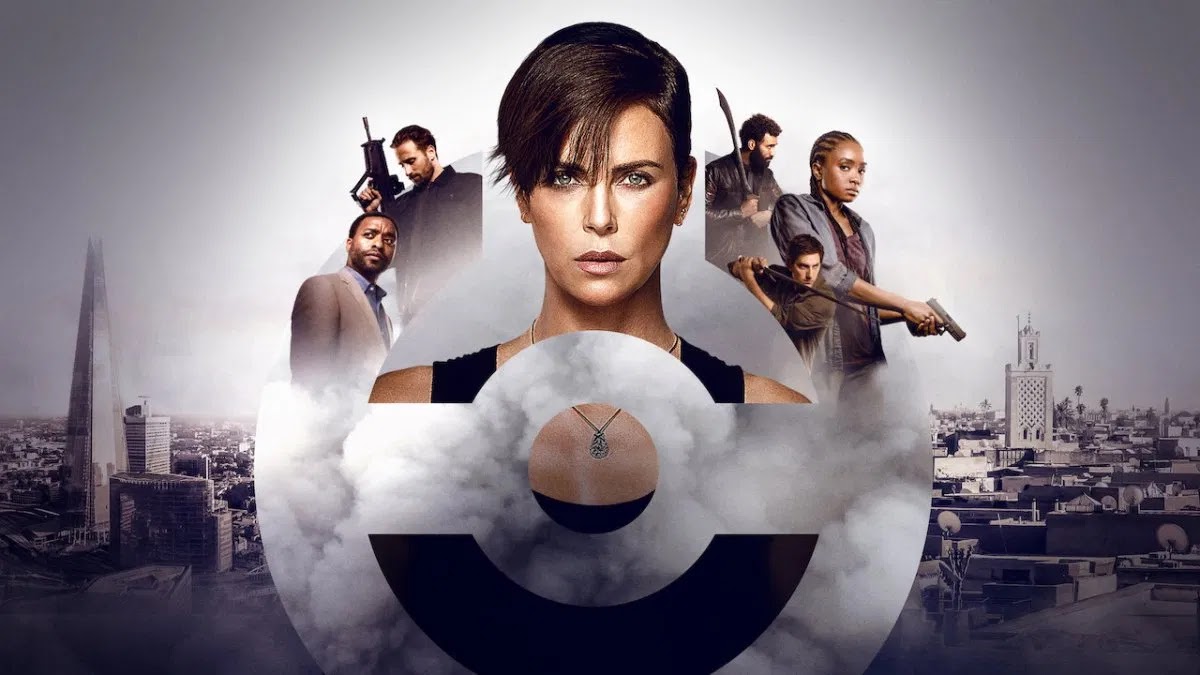
The Old Guard bring a fresh feel to superhero movies


Living forever is all very well but what would you talk about? That’s one of the more interesting questions posed by The Old Guard, a superhero movie from Netflix which is a cut above most in the genre.

There are hints of Gilgamesh, the first superhero, in this story of four immortals who have been together for years. These eternal warriors travel the world doing good, helping the less fortunate, saving the oppressed, but always below the radar.

Andromache (Charlize Theron) and her companions take sensible precautions. They never allow themselves to be seen, or photographed, and they never go back to the same place twice. The one time they allow themselves to break their rules there are consequences.

They are being hunted by big pharma in the shape of nasty genius Merrick (Harry Melling). He is only interested in monetising immortality which means capturing them and essentially vivisecting them for ever. Incidentally, they can’t die but they do feel pain making this a less than pleasant prospect.

The sensible thing to do would be to lie low and wait it out – unlike them Merrick won’t live forever. But a new immortal has emerged, Nile (Kiki Layne), who needs to be protected and brought into the group which means they need to go back out into the world and risk capture themselves.

Based on the comic book by Greg Rucka and Leandro Fernandez, The Old Guard is more thoughtful than we have come to expect from a superhero movie.  

There’s not a lot of dialogue they’ve pretty well said all they need. The most recent recruit Booker (Matthias Schoenerts) joined in the Napoleonic wars, while the other two members Nicky (Luca Marinelli) and Joe (Marwan Kenzari) were on opposing sides in the Crusades. Their big excitement is a guessing game with Charlize Theron and baklava – it’s better than it sounds, trust me.

That gives the story an interesting dynamic; more than most action movies this is about a group dynamic moving as a well-oiled machine. There is no fake heroism or macho posturing; they know what they are doing and why they are driven to do it.

Director Gina Prince-Bythewood does a terrific job of telling this story. Her previous films such as Love and Basketball (2000) and The Secret Life of Bees (2008) all feature characters with rich interior lives. None of that has been left behind just because they have superpowers. This is the first superhero movie I can think of in a long time where you have a real sense of who these people are. There is as much effort in the baklava sequence, for example, as there is in an action set piece.

The action scenes incidentally are superbly staged. Rather like Patty Jenkins’s handling of the Amazon warriors in Wonder Woman (2017), there is an emphasis on the aesthetics of combat rather than the brutality. The action is no less exhilarating but the tendency to shoot the characters in full figure brings an elegance to the proceedings. I shudder to think what these scenes would have been like handled by Zack Snyder or Michael Bay for example.

Like almost all Netflix movies The Old Guard is a shade on the long side, but it is still a thrilling an exciting story, very well told. The ending also sets things up very nicely and I suspect it won’t be too long before we see them all again.

Last Night in Soho offers vintage chills in fine style

The past, as L.P. Hartley reminds us, is a foreign country where they do things differently. Yet we are often inexorably drawn to it in th...